 ESPCI web site
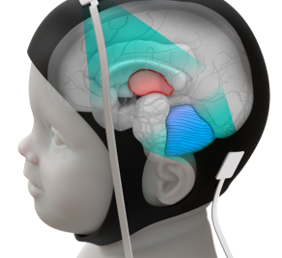
Design of optimal wearable ultrasound probe for neonatal functional ultrasound imaging using an in silico realistic brain phantom and in vitro validation.
Project description : Objective of the project: determine the characteristics of an optimal ultrasound imaging (sensor and imaging mode) for functional ultrasound brain monitoring in the neonate. Context: Recent work at Physique pour la Médecine Paris has opened major new possibilities for using ultrasound in neuroscience. We developed a new brain imaging method called functional […]
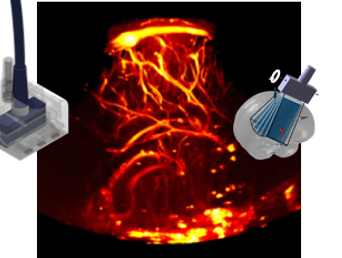
Neuroimaging in Neonates using Functional Ultrasound (fUS)
Project description : Context How does premature birth affect functional brain organisation? The CONEXUS project addresses this question via a prospective cohort study building a multimodal database of neonates imaged with functional ultrasound (fUS) across early neurodevelopment. The goal is to establish normative references for brain activity and functional connectivity in the developing brain using fUS, […]

Research Internship – Simulation of ultrasound propagation in the human cochlea for neuromodulation of ganglionar cells in hearing restoration
Objective of the project: determine via ultrasound propagation simulations if neuromodulation of neurons in the cochlea is doable. Context: Hearing restoration using cochlear implant is very widely used (more than 1 million people implanted worldwide) but non-optimal due to unbridgeable constraints: limitation in spatial resolution of electrical stimulation via an electrode array due to conduction […]
Ingénieur.e en conception de dispositifs biomédicaux (CDI)
L’Institut Physique pour la Médecine recherche son ingénieur.e de recherche en conception de dispositifs biomédicaux, pour accélérer la conception, la fabrication et la dissémination de technologies innovantes d’imagerie et de thérapie par ultrasons. L’Institut Physique pour la médecine a pour mission de créer des outils d’imagerie médicale et de thérapie basés sur des concepts innovants […]
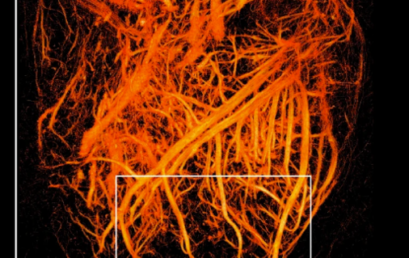
Internship – Design and testing of hydrogel prototypes for improved skin-probe coupling in ultrasound imaging
Background: Ultrasound is the most wide-spread imaging modality in the clinic, with the advantage of being portable and moderately inexpensive. However, it has traditionally suffered from the trade-off between resolution and framerate, limiting its resolution to the order of 1mm. Introduced in 2015, a novel imaging modality called ultrasound localization microscopy (ULM) has allowed considerably […]
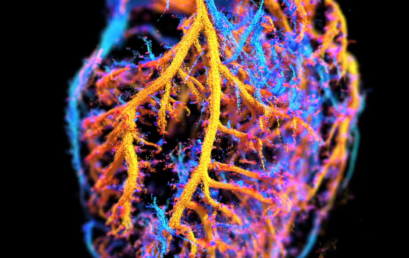
Stage – Algorithme haute performance de reconstruction pour l’échographie 3D ultrarapide
Algorithme haute performance de beamforming volumétrique pour l’échographie 3D ultrarapide Encadrant: Gwendal Henry, Mathieu Pernot Laboratoire: Physique pour la Médecine, INSERM, CNRS, ESPCI-Paris, PSL Parisanté campus, 10, Rue d’Oradour-sur-Glane, 75015 Paris / Hopital Européen Georges Pompidou, 15 rue leblanc 75015 Contact : gwendal.henry@espci.fr/mathieu.pernot@espci.fr Technologies clés : C/C++, CUDA, Calcul Parallèle (HPC), Traitement du signal. Contexte […]
Postdoctoral position – Toward Ultrasensitive 3D Ultrasound Localization Microscopy for Whole-Organ and Clinical Translation
The postdoctoral researcher will lead the development of next-generation ultrasensitive 3D/4D ULM, leveraging novel ultrasonic multi-lens probe technology (Favre et al PMB 2023; Haidour et al Nature Com 2025), ultrafast acquisition sequences, and advanced signal processing.
Postdoctoral position – Cardiovascular imaging
Location: Institute Physics for Medicine Paris, 2-10 rue d’Oradour-sur-Glane, 75015 Paris Contact: mathieu.pernot@espci.fr
Postdoctoral position – Ultrasound neurostimulation system development
Location: Institute Physics for Medicine Paris, 2-10 rue d’Oradour-sur-Glane, 75015 Paris Contact: Jean-Francois Aubry